Dice in a Corner
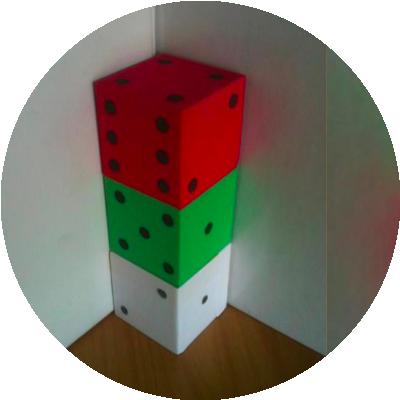
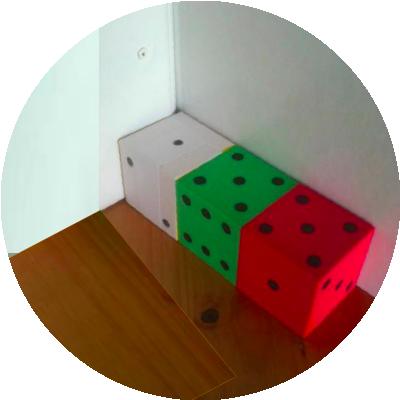
There are three dice sitting in the corner with the simple rule that where two dice meet there must be the same numbers facing each other.
So, in the first picture above there are $3$'s at the bottom of the red dice and on the top of the middle green and there are $4$'s on the bottom of the green dice and the top of the white dice. The numbers on the seven faces that can be seen are then added and make $21$.
So, in the first picture above there are $3$'s at the bottom of the red dice and on the top of the middle green and there are $4$'s on the bottom of the green dice and the top of the white dice. The numbers on the seven faces that can be seen are then added and make $21$.
In the second picture above there are $4$'s at the left of the red dice and on the right of the green dice and there are $3$'s on the left of the green dice and the right of the white dice. The numbers on the seven faces that can be seen are then added and make $23$.
Your challenge is to arrange dice (using at least $2$ and up to as many as you like) in a line from the corner, so as the faces you can see add up to $18$ (instead of the $21$ and $23$ above), in as many ways as possible.
Each line of dice must be along or up a wall (or two walls). A line going up is counted the same as a line going along. Remember the dice must touch face to face and have the same numbers touching. The lines of dice must be of a single thickness, so this one below is not allowed;