This problem has been designed to be
worked on in a group of about four. For more details about how you
might go about doing this, please read the Teachers'
Notes.
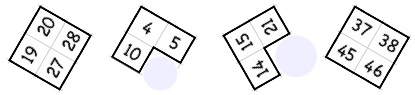
1. There are two jigsaw puzzles that your
teacher can print out for you from here.
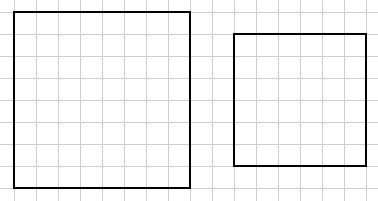
Complete each jigsaw and then put the pieces into the outline
squares, which can be printed from here.
2. Place the smaller square of numbers on top of the other larger
square in any way you like so that the small centimetre squares
match up. (You may find it easier to copy the numbers on the
smaller square onto a transparent sheet.)
3. Explore what happens when you add together the numbers that
appear one on top of the other.
4. In your group, explore any other ideas that you come up with.
When you've looked at the thirty six combinations then you probably
need to ask, "I wonder what would happen if we ...?". Change one
small thing, explore that and then compare your two sets of
results.