History of Measurement
This article tells you all about some early ways of measuring as well as methods of measuring tall objects we can still use today. You can even have a go at some yourself!
This article tells you all about some early ways of measuring as well as methods of measuring tall objects we can still use today. You can even have a go at some yourself!

Can you find any perfect numbers? Read this article to find out more...
Leonardo who?! Well, Leonardo is better known as Fibonacci and this article will tell you some of fascinating things about his famous sequence.
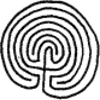
Did you know that ancient traditional mazes often tell a story? Remembering the story helps you to draw the maze.
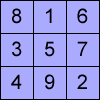
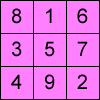
Find out about Magic Squares in this article written for students. Why are they magic?!
This article looks at the importance in mathematics of representing places and spaces mathematics. Many famous mathematicians have spent time working on problems that involve moving and mapping things.
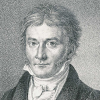
What would you do if your teacher asked you add all the numbers from 1 to 100? Find out how Carl Gauss responded when he was asked to do just that.

Read all about Pythagoras' mathematical discoveries in this article written for students.
A paradox is a statement that seems to be both untrue and true at the same time. This article looks at a few examples and challenges you to investigate them for yourself.
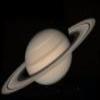
Mathematics has always been a powerful tool for studying, measuring and calculating the movements of the planets, and this article gives several examples.

This article for pupils describes the famous Konigsberg Bridge problem.
This article gives an wonderful insight into students working on the Arclets problem that first appeared in the Sept 2002 edition of the NRICH website.
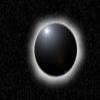
Mathematics has allowed us now to measure lots of things about eclipses and so calculate exactly when they will happen, where they can be seen from, and what they will look like.

Some local pupils lost a geometric opportunity recently as they surveyed the cars in the car park. Did you know that car tyres, and the wheels that they on, are a rich source of geometry?
Read this article to find out the mathematical method for working out what day of the week each particular date fell on back as far as 1700.
When you think of spies and secret agents, you probably wouldn’t think of mathematics. Some of the most famous code breakers in history have been mathematicians.
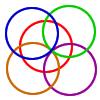
Read all about the number pi and the mathematicians who have tried to find out its value as accurately as possible.
This short article gives an outline of the origins of Morse code and its inventor and how the frequency of letters is reflected in the code they were given.
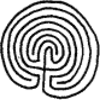
There is a long tradition of creating mazes throughout history and across the world. This article gives details of mazes you can visit and those that you can tackle on paper.
Calendars were one of the earliest calculating devices developed by civilizations. Find out about the Mayan calendar in this article.
In this article, the NRICH team describe the process of selecting solutions for publication on the site.
This article gives you a few ideas for understanding the Got It! game and how you might find a winning strategy.
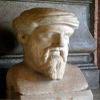
Pythagoras of Samos was a Greek philosopher who lived from about 580 BC to about 500 BC. Find out about the important developments he made in mathematics, astronomy, and the theory of music.
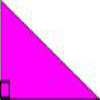
Liethagoras, Pythagoras' cousin (!), was jealous of Pythagoras and came up with his own theorem. Read this article to find out why other mathematicians laughed at him.

This gives a short summary of the properties and theorems of cyclic quadrilaterals and links to some practical examples to be found elsewhere on the site.
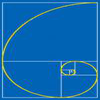
Draw whirling squares and see how Fibonacci sequences and golden rectangles are connected.
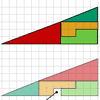
Logo helps us to understand gradients of lines and why Muggles Magic is not magic but mathematics. See the problem Muggles magic.
Ranging from kindergarten mathematics to the fringe of research this informal article paints the big picture of number in a non technical way suitable for primary teachers and older students.
The reader is invited to investigate changes (or permutations) in the ringing of church bells, illustrated by braid diagrams showing the order in which the bells are rung.
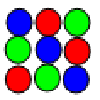
A Latin square of order n is an array of n symbols in which each symbol occurs exactly once in each row and exactly once in each column.
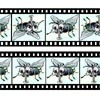
Patterns that repeat in a line are strangely interesting. How many types are there and how do you tell one type from another?
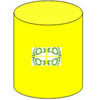
Proofs that there are only seven frieze patterns involve complicated group theory. The symmetries of a cylinder provide an easier approach.
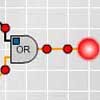
Learn about the link between logical arguments and electronic circuits. Investigate the logical connectives by making and testing your own circuits and fill in the blanks in truth tables to record your findings.
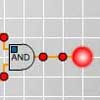
Investigate circuits and record your findings in this simple introduction to truth tables and logic.
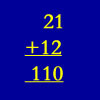
We are used to writing numbers in base ten, using 0, 1, 2, 3, 4, 5, 6, 7, 8, and 9. Eg. 75 means 7 tens and five units. This article explains how numbers can be written in any number base.

Lyndon Baker describes how the Mobius strip and Euler's law can introduce pupils to the idea of topology.
Mainly for teachers. A discussion and examples of some of the school mathematics of yesteryear.
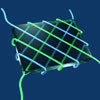
A personal investigation of Conway's Rational Tangles. What were the interesting questions that needed to be asked, and where did they lead?
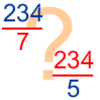
This article takes the reader through divisibility tests and how they work. An article to read with pencil and paper to hand.
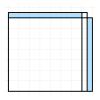
Can one example help us to perceive the generality?
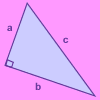
The first of two articles on Pythagorean Triples which asks how many right angled triangles can you find with the lengths of each side exactly a whole number measurement. Try it!
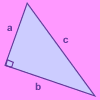
This is the second article on right-angled triangles whose edge lengths are whole numbers.
This article (the first of two) contains ideas for investigations. Space-time, the curvature of space and topology are introduced with some fascinating problems to explore.
This is the second of two articles and discusses problems relating to the curvature of space, shortest distances on surfaces, triangulations of surfaces and representation by graphs.
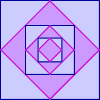
Start with a large square, join the midpoints of its sides, you'll see four right angled triangles. Remove these triangles, a second square is left. Repeat the operation. What happens?
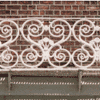
A gallery of beautiful photos of cast ironwork friezes in Australia with a mathematical discussion of the classification of frieze patterns.

Class 2YP from Madras College was inspired by the problem in NRICH to work out in how many ways the number 1999 could be expressed as the sum of 3 odd numbers, and this is their solution.
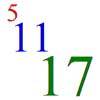
Sanjay Joshi, age 17, The Perse Boys School, Cambridge followed up the Madrass College class 2YP article with more thoughts on the problem of the number of ways of expressing an integer as the sum of odd numbers.
In this 7-sandwich: 7 1 3 1 6 4 3 5 7 2 4 6 2 5 there are 7 numbers between the 7s, 6 between the 6s etc. The article shows which values of n can make n-sandwiches and which cannot.
This article explains how credit card numbers are defined and the check digit serves to verify their accuracy.
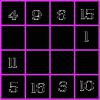
This article explains how to make your own magic square to mark a special occasion with the special date of your choice on the top line.
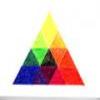
A description of some experiments in which you can make discoveries about triangles.

These formulae are often quoted, but rarely proved. In this article, we derive the formulae for the volumes of a square-based pyramid and a cone, using relatively simple mathematical concepts.
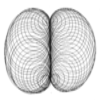
Introducing a geometrical instrument with 3 basic capabilities.
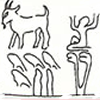
This article for the young and old talks about the origins of our number system and the important role zero has to play in it.

Scheduling games is a little more challenging than one might desire. Here are some tournament formats that sport schedulers use.
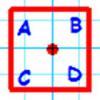
An article for students and teachers on symmetry and square dancing. What do the symmetries of the square have to do with a dos-e-dos or a swing? Find out more?
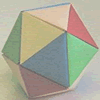
A description of how to make the five Platonic solids out of paper.
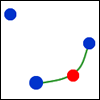
This article invites you to get familiar with a strategic game called "sprouts". The game is simple enough for younger children to understand, and has also provided experienced mathematicians with significant food for thought.
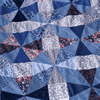
Jenny Murray describes the mathematical processes behind making patchwork in this article for students.
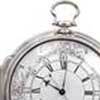
This article explains how Greenwich Mean Time was established and in fact, why Greenwich in London was chosen as the standard.
Who first used fractions? Were they always written in the same way? How did fractions reach us here? These are the sorts of questions which this article will answer for you.
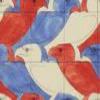
Have you ever noticed how mathematical ideas are often used in patterns that we see all around us? This article describes the life of Escher who was a passionate believer that maths and art can be intertwined.
Have you ever wondered how maps are made? Or perhaps who first thought of the idea of designing maps? We're here to answer these questions for you.
If you would like a new CD you would probably go into a shop and buy one using coins or notes. (You might need to do a bit of saving first!) However, this way of paying for the things you want did not always exist. Find out more ...
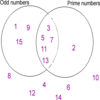
What does logic mean to us and is that different to mathematical logic? We will explore these questions in this article.
Nowadays the calculator is very familiar to many of us. What did people do to save time working out more difficult problems before the calculator existed?

This article for pupils and teachers looks at a number that even the great mathematician, Pythagoras, found terrifying.
Infinity is not a number, and trying to treat it as one tends to be a pretty bad idea. At best you're likely to come away with a headache, at worse the firm belief that 1 = 0. This article discusses the different types of infinity.
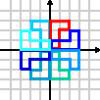
An introduction to groups using transformations, following on from the October 2006 Stage 3 problems.
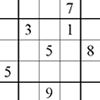
This second Sudoku article discusses "Corresponding Sudokus" which are pairs of Sudokus with terms that can be matched using a substitution rule.
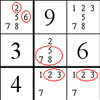
A particular technique for solving Sudoku puzzles, known as "naked pair", is explained in this easy-to-read article.
A story for students about adding powers of integers - with a festive twist.
This article for students and teachers tries to think about how long would it take someone to create every possible shuffle of a pack of cards, with surprising results.
Need some help getting started with solving and thinking about rich tasks? Read on for some friendly advice.

Think that a coin toss is 50-50 heads or tails? Read on to appreciate the ever-changing and random nature of the world in which we live.
Weekly challenges are here for NRICH! To celebrate this event, we've collected a set of 20 essential problems for you to try.

Here we look back at the year with NRICH and suggest mathematical summer holiday activities for students, parents and teachers.
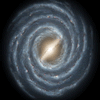
The third installment in our series on the shape of astronomical systems, this article explores galaxies and the universe beyond our solar system.

This article for pupils gives some examples of how circles have featured in people's lives for centuries.
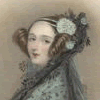
Most stories about the history of maths seem to be about men. Here are some famous women who contributed to the development of modern maths and prepared the way for generations of female mathematicians.
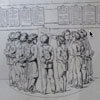
What was it like to learn maths at school in the Victorian period? We visited the British Schools Museum in Hitchin to find out.

This article explores ths history of theories about the shape of our planet. It is the first in a series of articles looking at the significance of geometric shapes in the history of astronomy.
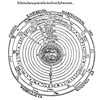
The second in a series of articles on visualising and modelling shapes in the history of astronomy.
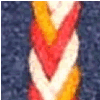
This article for students gives some instructions about how to make some different braids.
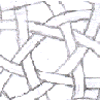
This article for pupils gives an introduction to Celtic knotwork patterns and a feel for how you can draw them.
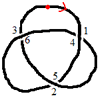
This article for students introduces the idea of naming knots using numbers. You'll need some paper and something to write with handy!
This article gives a brief history of the development of Geometry.
This is the first of a two part series of articles on the history of Algebra from about 2000 BCE to about 1000 CE.

This is the second article in a two part series on the history of Algebra from about 2000 BCE to about 1000 CE.
The first of three articles on the History of Trigonometry. This takes us from the Egyptians to early work on trigonometry in China.
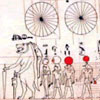
Some explanations of basic terms and some phenomena discovered by ancient astronomers

Noticing the regular movement of the Sun and the stars has led to a desire to measure time. This article for teachers and learners looks at the history of man's need to measure things.
In the time before the mathematical idea of randomness was discovered, people thought that everything that happened was part of the will of supernatural beings. So have things changed?
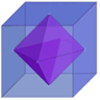
The Four Colour Conjecture was first stated just over 150 years ago, and finally proved conclusively in 1976. It is an outstanding example of how old ideas can be combined with new discoveries. prove a mathematical theorem.

In this article, Rachel Melrose describes what happens when she mixed mathematics with art.
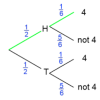
This article explains how tree diagrams are constructed and helps you to understand how they can be used to calculate probabilities.
Uncertain about the likelihood of unexpected events? You are not alone!

We need computer programmers! Logo is a great entry-level programming language - and you can create stunning graphics while you learn.

The design technology curriculum requires students to be able to represent 3-dimensional objects on paper. This article introduces some of the mathematical ideas which underlie such methods.
A introduction to how patterns can be deceiving, and what is and is not a proof.

When making estimates, it is easy to be quite wrong, but it only takes a little thought to be almost right. In this article, we explore a few techniques and methods which will make our estimations better.
Simon Singh describes PKC, its origins, and why the science of code making and breaking is such a secret occupation.
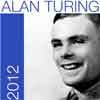
Dr James Grime takes an Enigma machine in to schools. Here he describes how the code-breaking work of Turing and his contemporaries helped to win the war.

How do decisions about scoring affect who wins a combined event such as the decathlon?
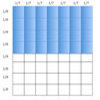
This article looks at how models support mathematical thinking about numbers and the number system
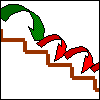
Spotting patterns can be an important first step - explaining why it is appropriate to generalise is the next step, and often the most interesting and important.