Fraction Fascination
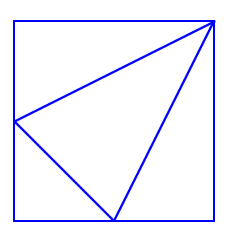
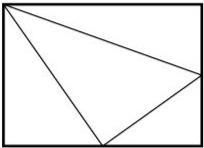
I drew this picture by drawing a line from the top right corner of a square to the midpoint of each of the opposite sides. Then I joined these two midpoints with another line.
Can you see four triangles in the square?
What fraction of the area of the square is each of these triangles?
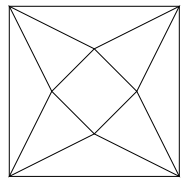
Then I drew another picture:
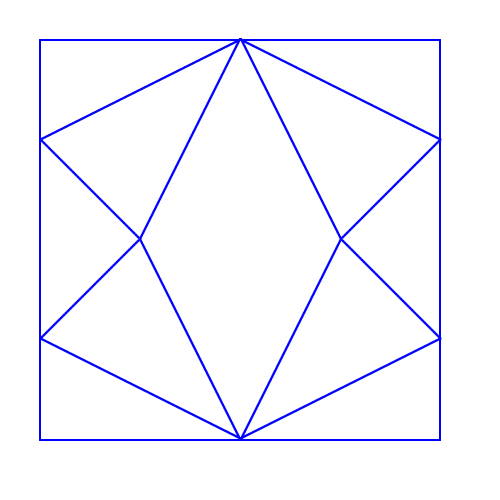
How is this made using the first square?
What is the shape that has been created in the middle of this larger square?
What fraction of the total area of the large square does this shape take up?
Pupils can be given the first shape printed out on large sheets and allowed to do some cutting up and then the pupils being brougt together to discuss what their thoughts and finding are.
The discussion could lead a teacher to gain some ideas as to how their pupils are grasping the ideas surrounding area and fractions. Decisions coud then be made about whether to go further to look at the later questions or to pursue the first question much further.
Key questions
Tell me about your folding/cutting.
What do you think about the area/size of this shape?
What have you noticed so far?
Possible extension
You can open out this activity by extending thoughts and ideas.
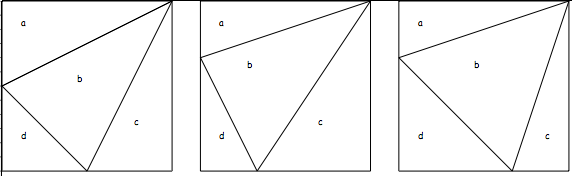
The original triangle could be looked at and ideas for changing it explored.
So you may come up with ideas like these new ones;
These came about by making the corners of the triangles a third of the way along rather than half as in the first, original one. You could usefully ask the pupils what they notice about the four areas in each of these three examples.
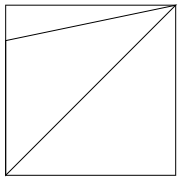
Triangles can be formed in different ways of course so opening the door to ideas such as:
Now we have only 3 areas to explore, but what can the pupils say about them? [The point on the left hand side is 1/4 of the way down.]
They could explore many more examples like this and compare the three areas and triangles you create.
Then there is the second part of the question. Asking pupils if they could do something else with the original shape to produce a tiling effect can lead to all kinds of ideas. One that I saw was;
Again questions about areas can be explored.
Alternately you could right away present the same idea using the common A4 size of paper.
So it's really a matter of changing the original question slightly and getting the pupils to say what they see and what ideas could be explored.
Possible support
Some pupils may need to have an adult with the to help in sustaining concentration.