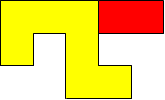
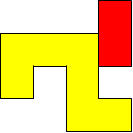
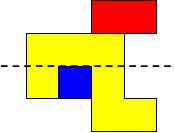
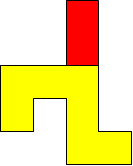
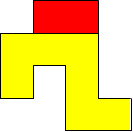
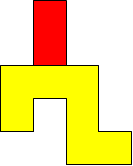
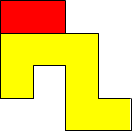
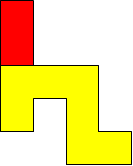
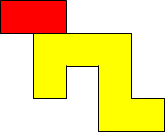
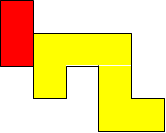
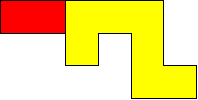
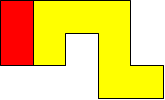
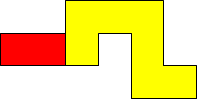
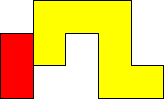
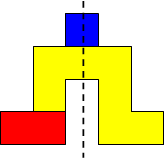
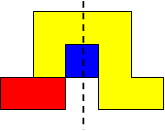
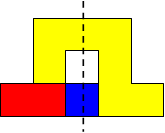
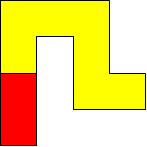
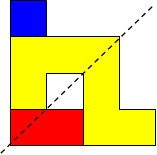
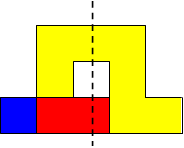
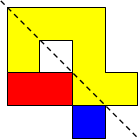
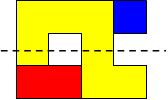
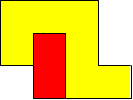
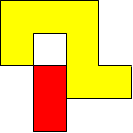
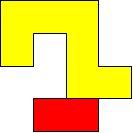
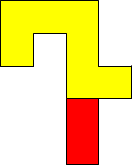
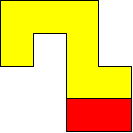
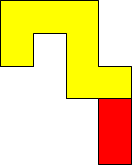
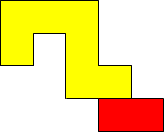
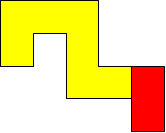
An excellent solution from Andrei of School 205 Bucharest. I like this very much because of the effective and systematic approach he took to investigating the problem.
Here is Andrei's solution:
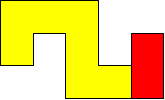
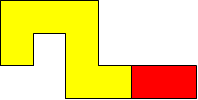
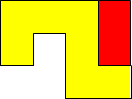
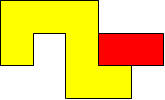
I worked systematically. I took the big (yellow) piece and I placed the rectangle in all the possible locations around it. Then I looked if the figure admitted a symmetry line (vertical, horizontal, or at a 45$^{\circ}$ angle) adding a small square (blue). Here is all my work and the solutions I found, with the corresponding symmetry line:
|
|
|
|
|
|
|
|
|
|
|
|
|
|
|
|
|
|
|
|
|
|
|
|
|
|
|
|
|
|
|
|
|
|
|
|
|
|
|
|
|
|
|
|
|
|