Sarah sent us her answer to this
problem:
Once we've got some number of squares, say n, we can get n+3, by
subdividing one of the squares into 4. So if we can get 4, 6 and
8 squares, then we can also get 7, 10, 13, ..., 9, 12, 15, ...
and 8, 11, 14, ... squares, that is, we can get 4, 6, 7, 8, 9,
10, 11, 12, and in fact everything above this.
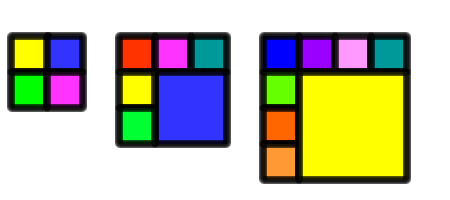
Here's how we can get 4, 6, and 8 squares.
William noticed that you can't make 2, 3
or 5 squares. Here's his explanation for why not:
For 2 or 3 squares, you'd have to have a small square with at
least two of its corners at the corners of the big square. But
then it would be the same size as the big square, so we'd only
use 1 square. For five squares, you'd have to have a different
square in each corner (for the reason just explained). But if you
think about it you see that if you're going to have more than
four squares, then you actually need at least six, so you can't
do it with 5.